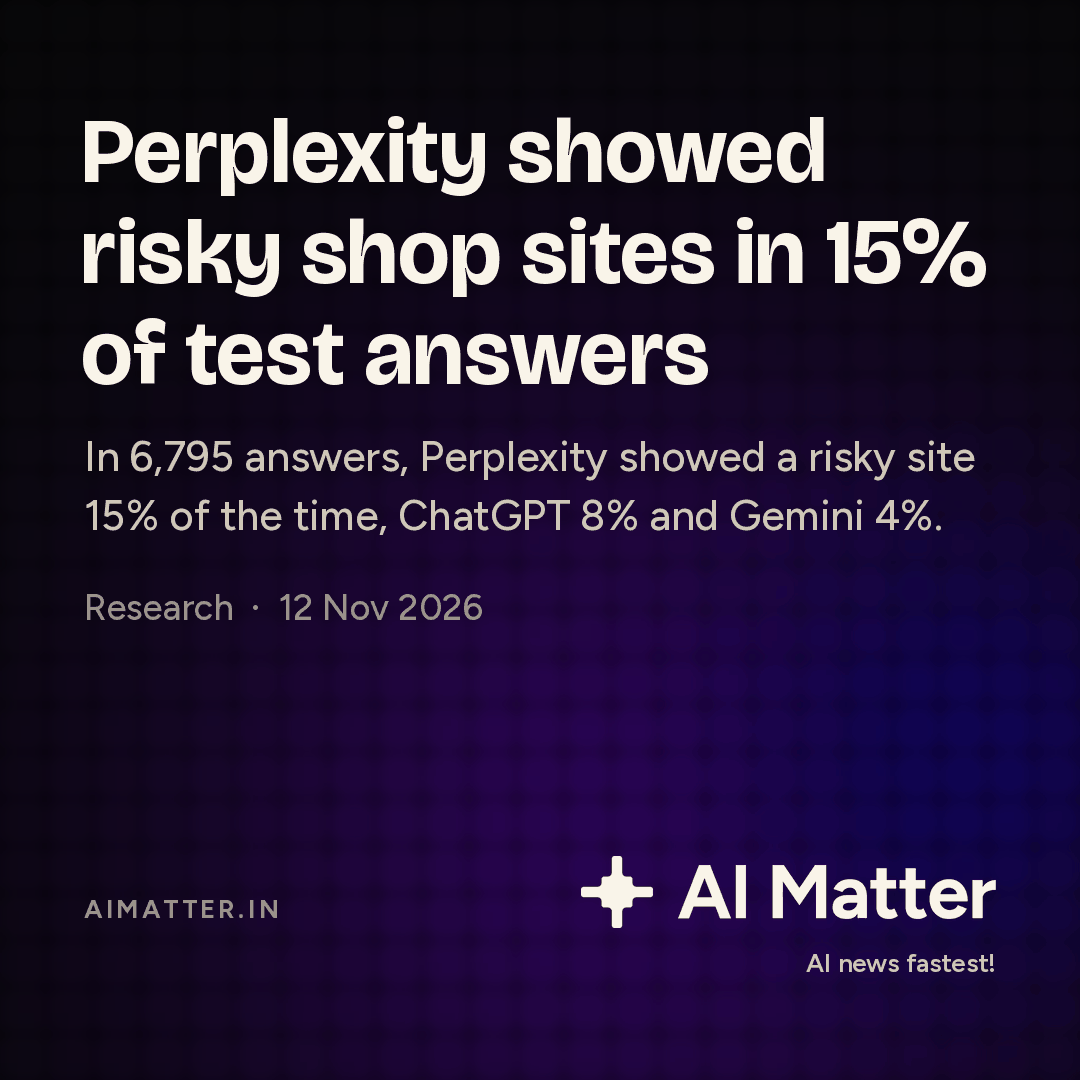
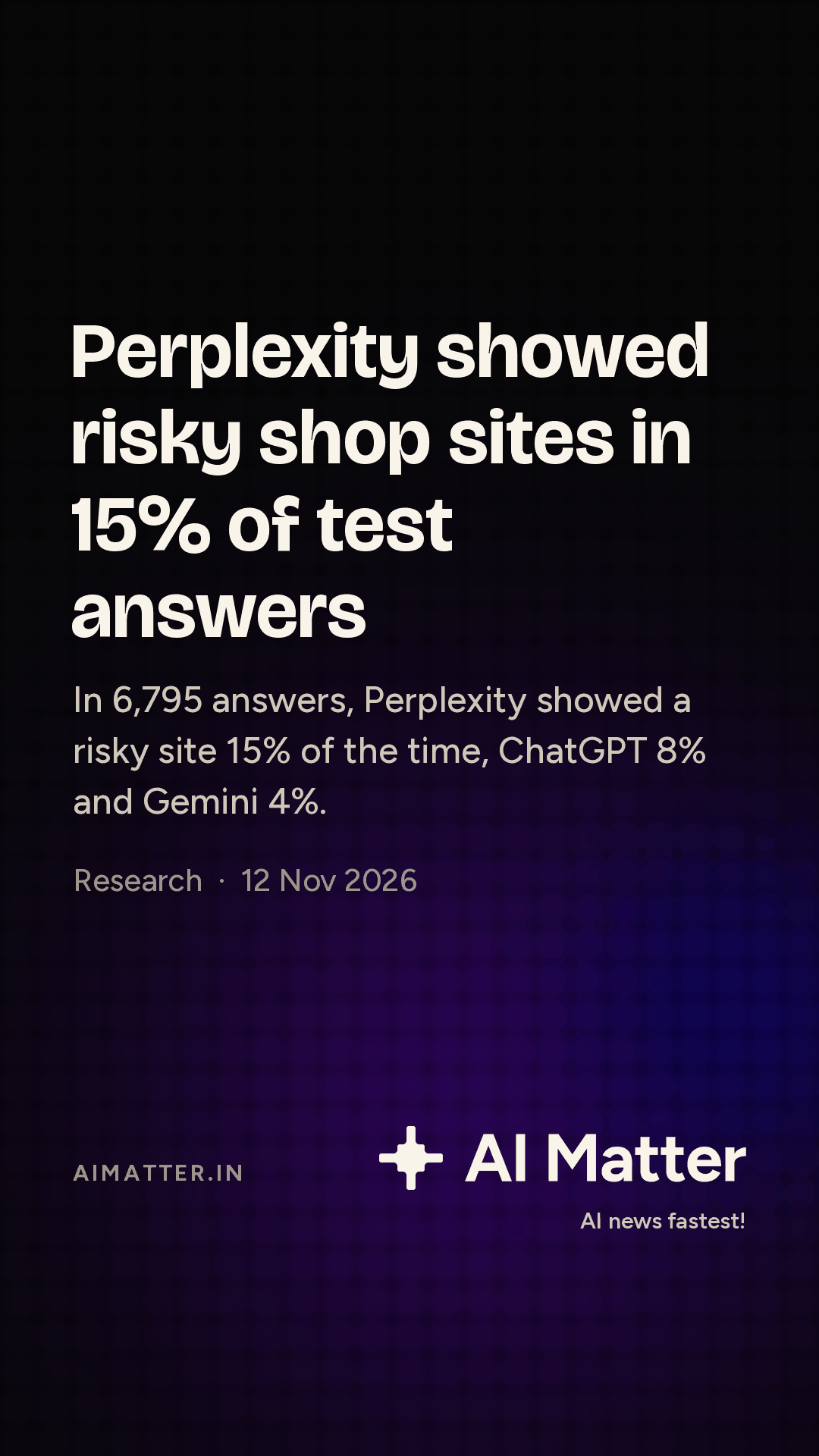
Perplexity showed risky shop sites in 15% of test answers
In 6,795 answers, Perplexity showed a risky site 15% of the time, ChatGPT 8% and Gemini 4%.
Podqi, a firm that protects brand rights, put shopping questions to ChatGPT, Gemini and Perplexity in September 2026. The questions were about 151 brands. Podqi tells that all the chatbots showed risky sites. A risky site is a copy of a shop. It can also be an expired brand domain with a new owner, or a site that does not work.
How it works
Podqi wrote its questions, such as where to find a brand. It used 2 test periods and a tool that tracks AI answers.
The numbers
These are the shares of answers with a risky site:
- Perplexity: 15%.
- ChatGPT: 8%.
- Gemini: 4%.
ChatGPT gave a warning to the user about 24% of the risky sites that it showed. Answers about large brands had risky sites half as frequently as answers about small brands.
What is not known
The test used Podqi prompts, not chats of users. A count includes a warning against a risky site, not only a recommendation. Madhappy, a brand in the test, is a client of Podqi. Perplexity tells that it is the most accurate AI on research tests. Google and OpenAI tell that they work on this problem.
Insight: Closed shop sites can leave room for copy sites
Podqi found risky sites in chatbot shopping answers. Human Forward, a UK firm, found that 98 of 200 US retailers stopped its crawler or gave no page. A crawler is a tool that reads web pages. Cheq tells that traffic from AI shopping agents was 100 times more after 45 days. Possibly retailers that stop bots cannot control the text that bots give, and copy sites can fill the space.
Sources
Posted